Booking choice: The small-group luxury day with a gourmet lunch, with free cancellation up to 24 hours before. Book this Compare the options below
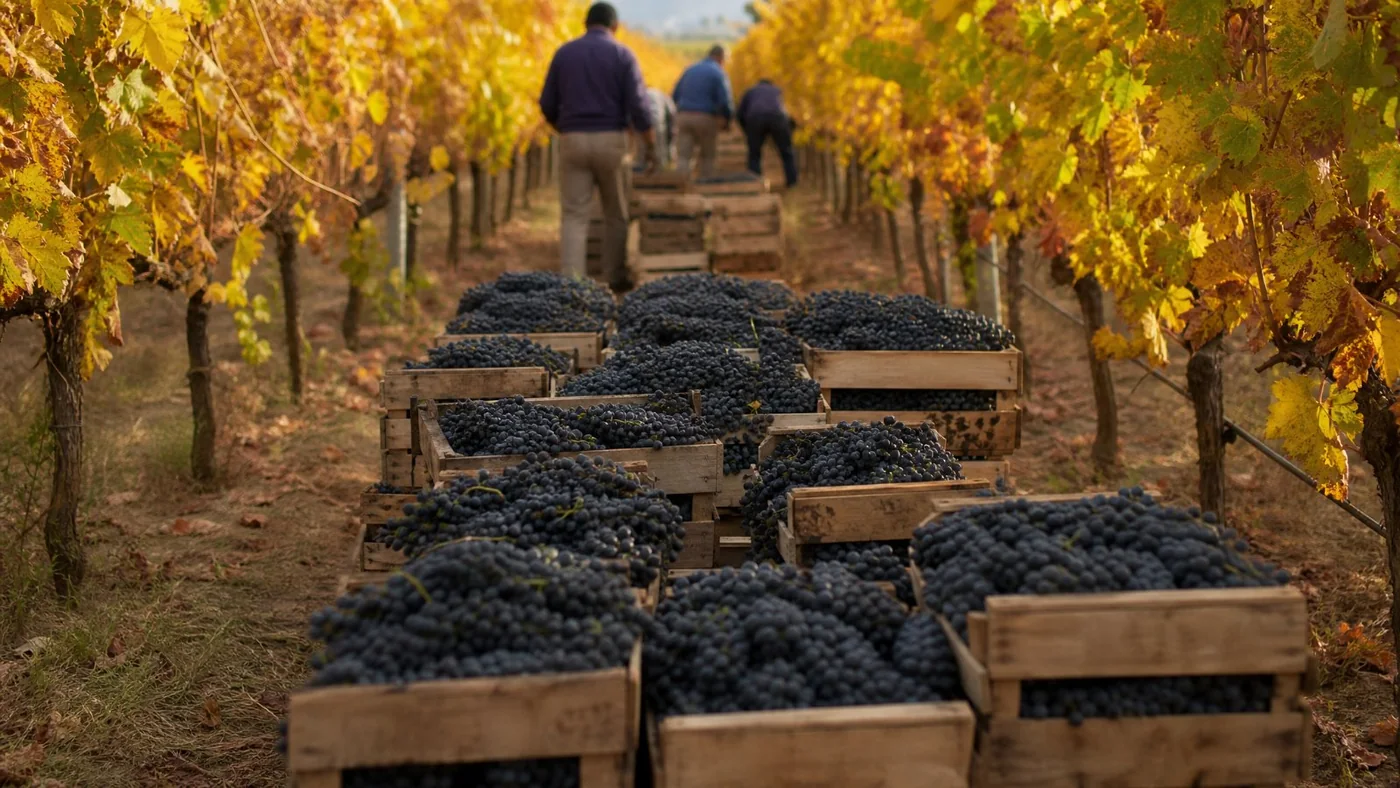
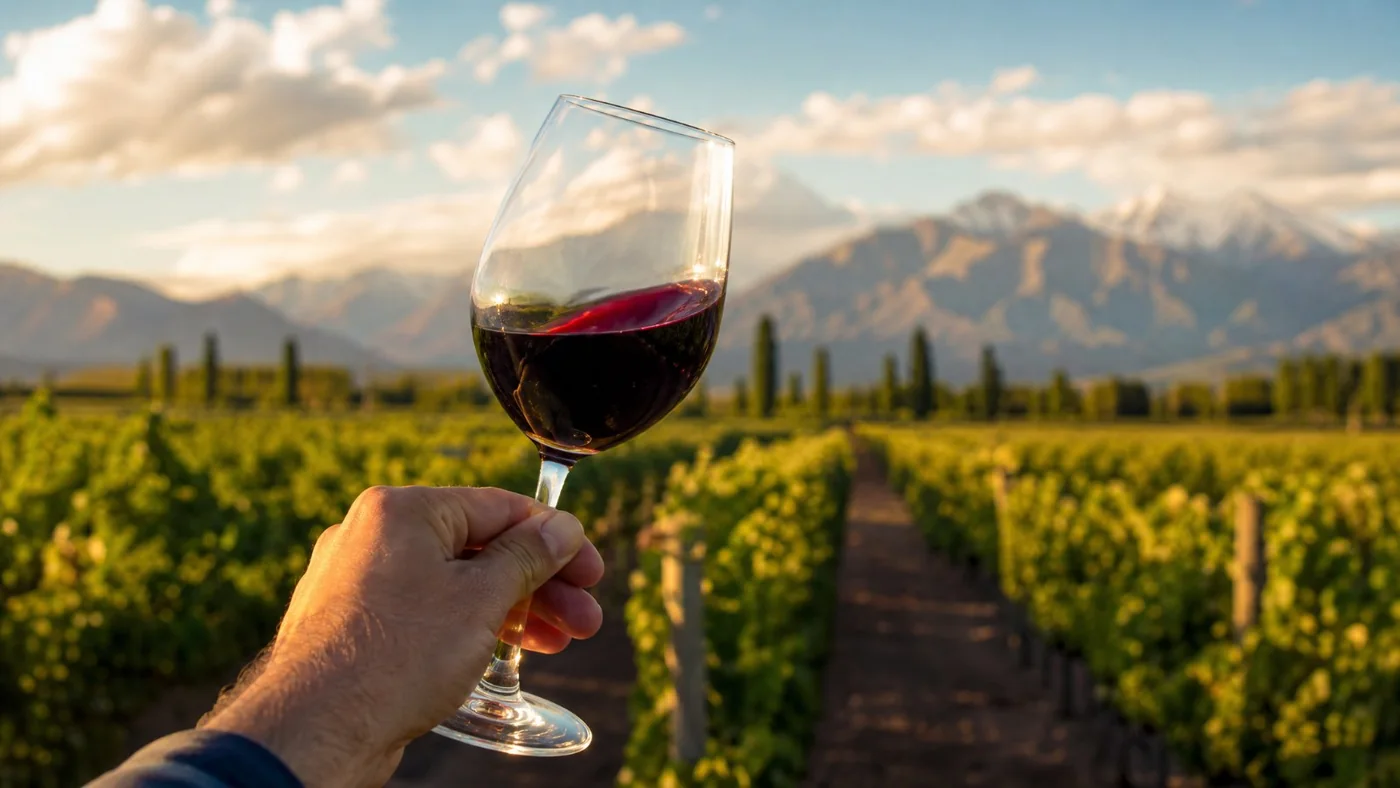
Malbec is the most planted grape in Mendoza, and Mendoza produces the large majority of Argentina's Malbec. In 2024, through October, Malbec made up close to two thirds of Argentina's exported wine. For most visitors, a Mendoza tasting is a Malbec tasting first.
This guide covers how the grape arrived, how Argentine and French Malbec differ, which other wines you will meet, and how a winery tasting runs on the tours sold here. It does not rank bottles; it helps you taste with more confidence.
The quick answer
Mendoza is famous above all for Malbec, the province's most planted grape. On a tour you will also meet Cabernet Sauvignon, Bonarda, Cabernet Franc and Syrah among the reds, Chardonnay and Torrontés among the whites, and sparkling wine at Chandon. There is no single best Malbec: the area, the altitude and the time in barrel change it, and a tasting that compares young and aged wines is the quickest way to find the style you like.
What wines is Mendoza famous for?
Malbec first. Mendoza is also known for Cabernet Sauvignon, Bonarda, Cabernet Franc and Syrah, for whites such as Chardonnay and Torrontés, and for sparkling wine.
Malbec is the grape that put Mendoza on wine lists abroad. It is the most planted variety in the province, and close to two thirds of the wine Argentina exported in 2024, through October, was Malbec. The other grapes are worth your attention too: Bonarda, Cabernet Sauvignon, Cabernet Franc and Syrah among the reds, Chardonnay and Torrontés among the whites.
Where the grapes grow changes the wine. The areas a day tour visits, from Maipú near the city to the high Uco Valley, are explained in Mendoza wine regions.
How did Malbec come to Mendoza?
With the French agronomist Michel Aimé Pouget in 1853. The project he led was presented to the provincial legislature on 17 April, now Malbec World Day.
Pouget was hired, on Domingo Faustino Sarmiento's initiative, to run the Quinta Agronómica de Mendoza, an agricultural school also known as the Quinta Normal. He brought French vine cuttings, Malbec among them. On 17 April 1853 the project went before the provincial legislature under governor Pedro Pascual Segura, which is why Argentina celebrates Malbec World Day, Malbec al Mundo, on 17 April.
From there the grape found a home in the dry, sunny, irrigated vineyards of Cuyo, and it became the wine most people associate with Argentina.
Is French or Argentinian Malbec better?
Neither is better; they are different expressions of the same grape. Malbec's traditional home in France is Cahors, while Mendoza grows it in a dry, high desert.
Climate and soil change how a grape tastes, and the two places are very different. Mendoza's vineyards sit between about 600 and 1,500 m, in a desert watered by snowmelt, with warm days and cold nights in the Uco Valley. That setting gives Argentine Malbec its own character.
The fair comparison is in the glass. If you have tasted Malbec from France at home, a Mendoza tasting is the place to notice the difference for yourself, without anyone keeping score.
Several wineries and a gourmet paired lunch on one day, for adults only, in one language per departure.
Book thisWhat is the best Malbec wine from Mendoza?
There is no single best bottle. The best Malbec for you depends on the area, the altitude and how long it spent in barrel, and a guided tasting is the quickest way to find out.
Malbec from a high Uco Valley site and Malbec from Luján de Cuyo, Argentina's first controlled appellation, can taste quite different, and so can a young wine and one aged in oak. A tour that visits several wineries shows those contrasts side by side.
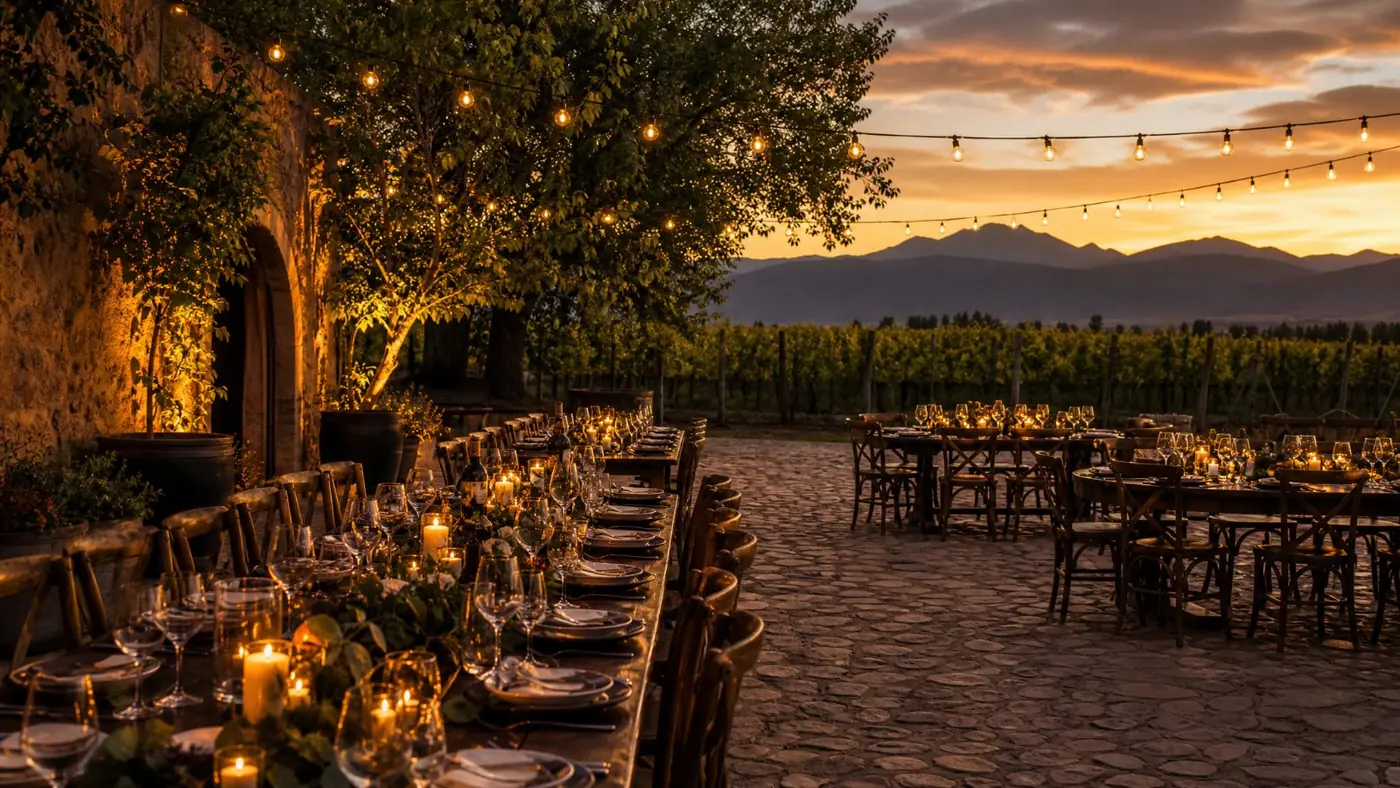
The luxury tour is built for this: tastings at 3 to 4 wineries in Luján de Cuyo or the Uco Valley, with the wineries changing daily, and a multi-course gourmet lunch with pairings at the third winery. It is for adults 18 and over, and vegetarian or vegan meals are available on request, per the listing.
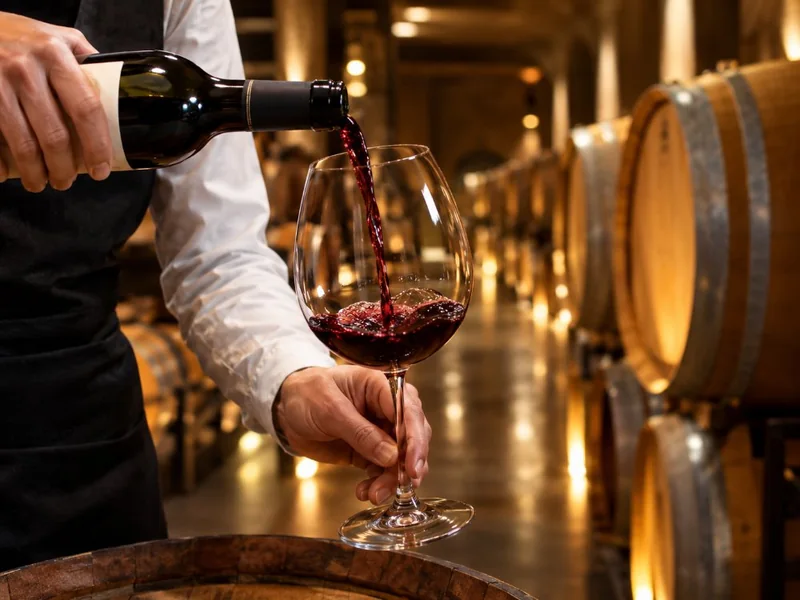
Taste Malbec at 3 to 4 wineries, then sit down to a multi-course gourmet lunch with paired wines.
Book thisWhat are the top 3 red wines you will taste in Mendoza?
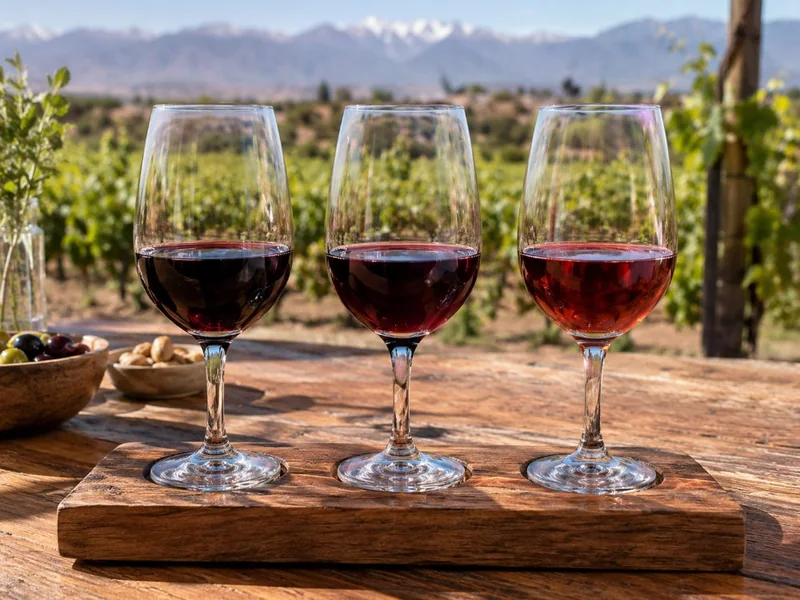
Expect Malbec, Cabernet Sauvignon, and Bonarda or Cabernet Franc. These are the reds you are most likely to meet, not a ranking.
Malbec is the grape you are most likely to see in a flight, as the most planted variety in the province. Cabernet Sauvignon is the next red most visitors recognise, and Bonarda and Cabernet Franc are the two that often surprise people who know Argentina only for Malbec. Syrah turns up too.
- Malbec: the signature grape of the region and of Argentina's exports.
- Cabernet Sauvignon: a familiar name, on its own or alongside Malbec.
- Bonarda or Cabernet Franc: worth asking for if they are on the list.
Whites are part of the story as well: Chardonnay and Torrontés. Ask your guide which wines a winery is proudest of; the answer tells you a lot about the place.
Is Mendoza wine good?
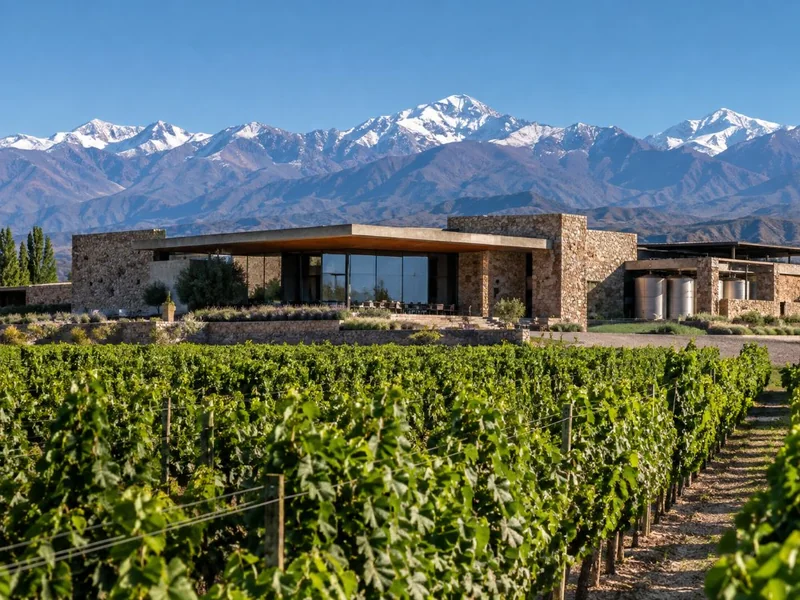
Mendoza is the heart of Argentine wine: it makes more than eight in ten bottles of the country's wine, and around 900 wineries work there, about 230 open to visitors.
Quality and choice come with that scale. The province holds about 140,682 ha of vines, from historic family estates in Maipú to modern wineries in the Uco Valley. Whatever your taste, there is a winery making it.
The easiest way to judge is to taste on site. The small-group lunch tour combines a guided tasting at one winery with a three-hour multi-course lunch with pairings at a second, for groups of up to 8. For a comparison of all the formats, see which Mendoza wine tour is best.
One guided tasting and a three-hour paired lunch at a second winery, in a group of 8 at most.
Book thisDoes Mendoza make sparkling wine?
Yes. Bodega Chandon makes sparkling wine in Luján de Cuyo, and a three-hour visit there tastes four of them with pairings.
The Chandon visit tours the gardens, the winemaking area, the tanks and the cellar for about an hour and a half, then pours four sparkling wines with culinary pairings. The listing also mentions an optional lunch. Guiding is offered in Spanish, English, Portuguese and Chinese, and hotel pickup takes about 40 minutes each way.
It is a good half-day choice for anyone who prefers bubbles to big reds, or who wants a change after a day of Malbec. It is not suitable for pregnant women or people with mobility impairments.
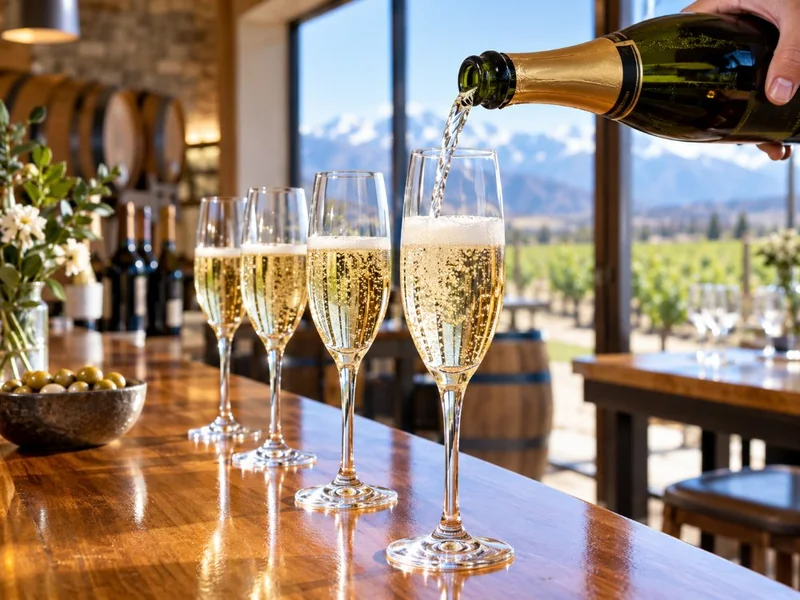
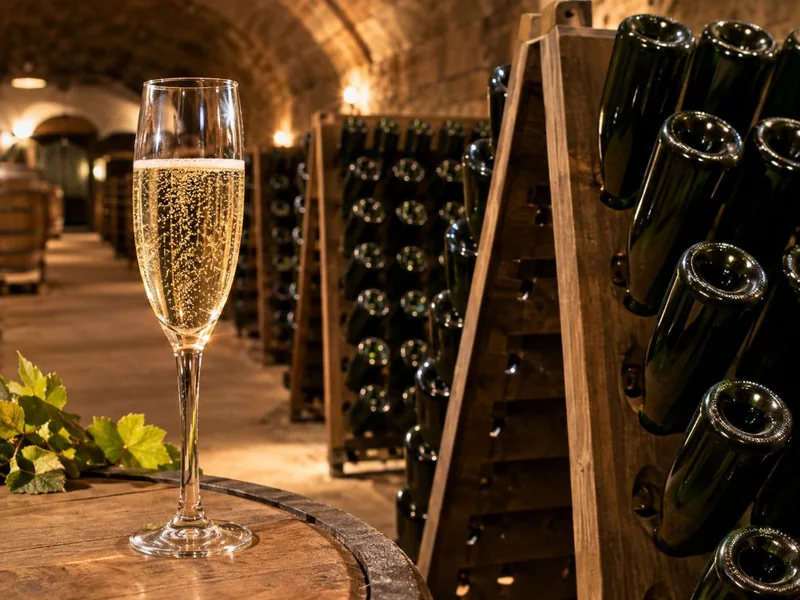
A three-hour visit to Chandon's sparkling-wine house, with four wines and culinary pairings.
Book thisHow does a winery tasting work?
A guide shows you the winery, then pours a short flight. On the Maipú afternoon tour the listing describes three wines at each winery, comparing young and aged wines.
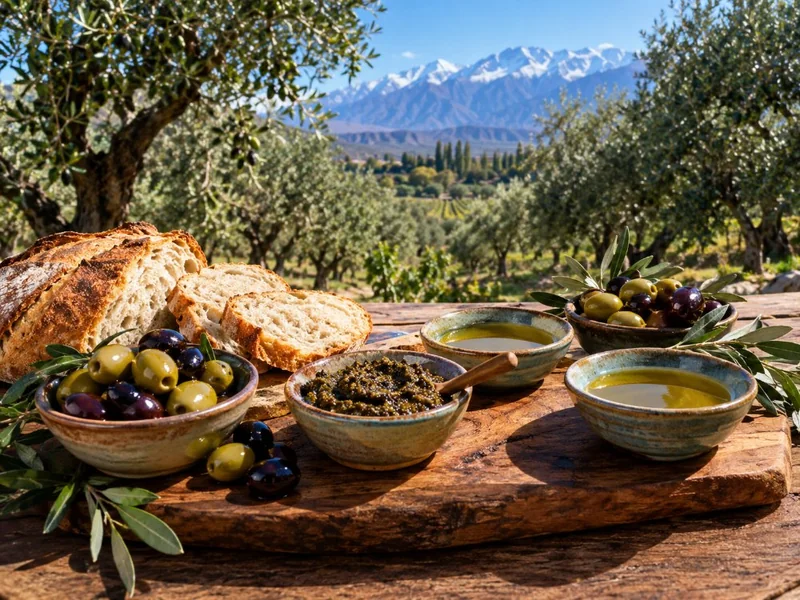
On the Maipú afternoon tour, each of the three wineries pours three wines across white, red and rosé, so you can taste how age and style change the wine. The day ends at an olive-oil factory with bread, olive oil and olive paste, which is a welcome break from wine.
Pace yourself. Drink water between pours, eat when you can, and use the spit bucket if you want to taste more than you drink. Leave the driving to the tour. For the right season to visit, see the best time to visit Mendoza.
Frequently asked questions
When is Malbec World Day?
17 April, the date in 1853 when the Quinta Agronómica project led by Michel Aimé Pouget was presented to Mendoza's legislature.
Is Malbec the most planted grape in Mendoza?
Yes. Malbec is the most planted grape in the province, and Mendoza produces the large majority of Argentina's Malbec.
Which white wines will I taste?
Chardonnay and Torrontés are the whites you are most likely to meet, alongside the sparkling wines at Chandon.
Can I visit a winery if I prefer sparkling wine?
Yes. The Chandon visit in Luján de Cuyo tastes four sparkling wines with culinary pairings in about three hours.
Ready to book
Choose your wine tour
Free cancellation up to 24 hours before on every option. Booked on GetYourGuide.
Small-Group Luxury Wine Day with Gourmet Lunch
Tastings at three or four wineries in Luján de Cuyo or the Uco Valley and a long gourmet lunch with pairings, in one language per departure
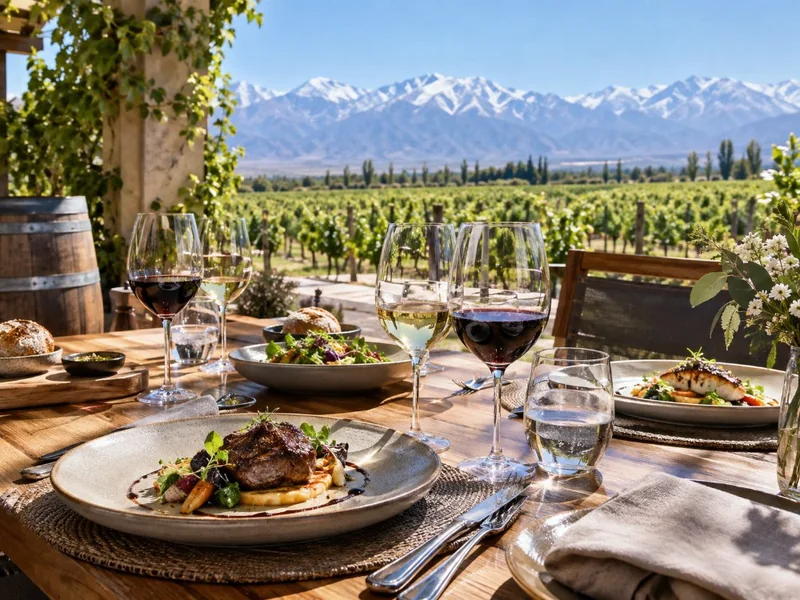
Two Top Wineries & a Long Paired Lunch
- A winery visit with a guided tour and tasting, about an hour and a half
- A multi-course lunch with wine pairings at a second winery, about three hours
- Wineries in Luján de Cuyo or the Uco Valley, set by availability; the listing names examples such as Budeguer and Domaine Bousquet
Chandon: The Sparkling Side of Mendoza
Not every Mendoza bottle is a Malbec. This short visit goes to Bodega Chandon in Luján de Cuyo for a guided walk through the gardens, the winemaking area, the tanks and the cellar, then a tasting of four sparkling wines with small culinary pairings, with an optional lunch per the listing.